April 2026 Community Engagement Meeting Recap
April 2026 Community Engagement Meeting Recap
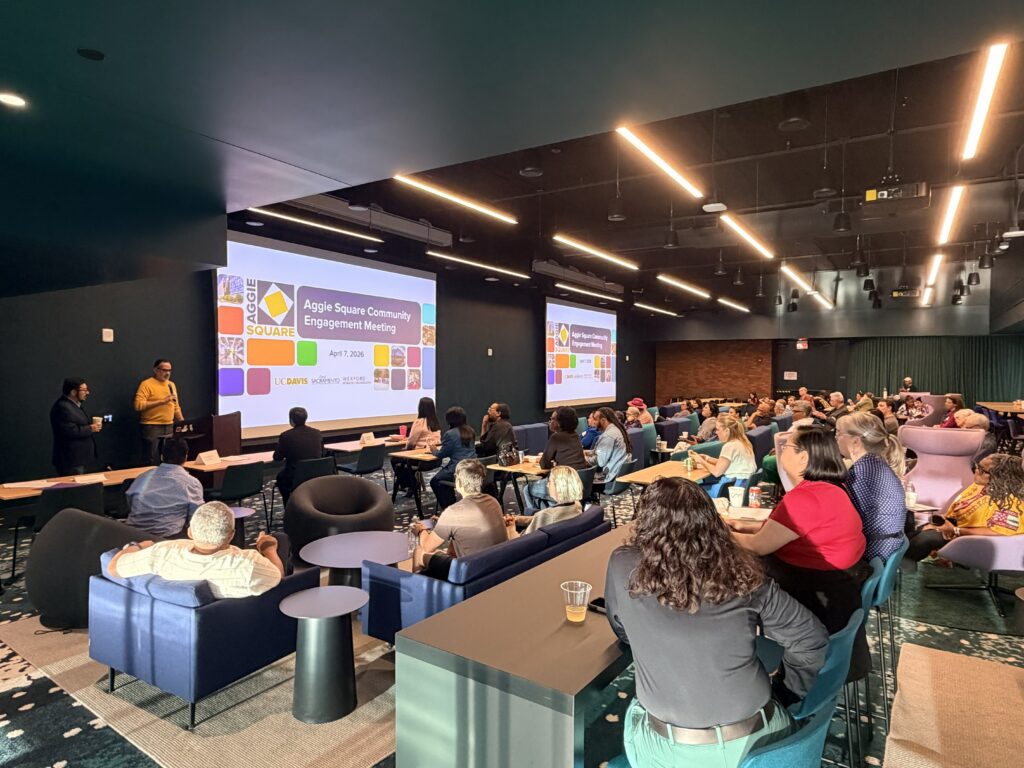
The Aggie Square partners host community engagement meetings on a variety of topics including workforce development, youth opportunities, benefits for local residents, businesses and more. We strive to make the events as informative and engaging as possible. Starting in 2026, the meetings take place twice a year in April and October. If you missed last month’s meeting, this recap provides the highlights.
Missed the meeting? Download the presentation!
Seventy community members joined partners from UC Davis, the City of Sacramento and Wexford Science & Technology on Tuesday, April 7 for the latest Aggie Square Community Engagement meeting, which focused on outcomes highlighted in the inaugural Community Benefits Partnership Agreement (CBPA) Annual Progress Report and the first awardees of the Aggie Square Community Fund.
Presenters shared key achievements from the report, which covers activities from 2021 through December 2025 and reflects strong early momentum following the opening of Aggie Square’s first buildings in May 2025. Updates highlighted coordinated investments across affordable housing, workforce development, community programming and neighborhood access.
Key achievements discussed during the meeting included:
- A continued commitment towards communication and outreach, with over 50 newsletters published and delivered to 100,000+ inboxes since 2021
- $74 million committed to affordable housing, supporting projects that will deliver approximately 1,500 affordable units along the Stockton Boulevard corridor,
- $10 million in funds committed to housing stabilization programs, supporting organizations such as Habitat for Humanity, CLTRE and others serving local residents,
- More than 350 events hosted at Aggie Square, drawing over 13,500 attendees, including 128 community events,
- $792,000 in value provided through discounted or waived venue fees and public access to space, expanding community use of Aggie Square,
- 230 workforce program enrollments and more than 80 job placements through pilot training programs and state-funded initiatives, and
- Launch of NextGen Bio, a regional workforce program focused on biotech serving 45 students and nine educators in its inaugural cohort.
Speakers emphasized the importance of continued collaboration to ensure Aggie Square delivers meaningful, long-term benefits for surrounding neighborhoods. The meeting also reinforced the role of ongoing engagement, with the report being the first in a series of annual updates that will occur over the first 10 years of Aggie Square’s operation.
Aggie Square Community Fund Grant Awardees Announced
The meeting also featured the announcement of the inaugural Aggie Square Community Fund Grant Award recipients, underscoring a continued commitment to community-led investment and shared decision-making.
Central to this effort is the Aggie Square Community Partnership (ASCP), which serves as a forum for ongoing community participation and engagement. The ASCP helps guide how Community Fund resources are allocated, ensuring investments reflect neighborhood priorities and deliver meaningful, tangible benefits to surrounding communities.
The partnership is composed of six community members—including a youth representative—from the following neighborhood organizations: Colonial Heights, Elmhurst, Oak Park, South Oak Park and Tahoe Park. Their perspectives are complemented by institutional members, including the Los Rios Community College District, UC Davis, UC Davis Health, Wexford Science & Technology and a yet-to-be-named Aggie Square industry tenant.
This year’s grant award recipients, whose proposals reflect the diverse needs and aspirations of the neighborhoods connected to Aggie Square, included:
SPARK AWARDS: $5,000 – $10,000
- National Coalition of 100 Black Women Sacramento (NCBW) to launch a neighborhood-focused, replicable mentoring and literacy model serving 75 middle and high school girls (three cohorts of 25) and at least 40 younger girls in the Summer Girls Reading Program.
- Mark Twain Elementary Parent Teacher Association (PTA) to create permanent, community-designed murals that strengthen neighborhood identity, expand youth opportunities, and transform Mark Twain Elementary into a more welcoming public space.
- Blacks in Government (BIG) – Sacramento Chapter to expand equitable access to high‑quality leadership development, academic enrichment, and mentorship for high school students in the Oak Park neighborhoods surrounding Aggie Square.
- City Church of Sacramento to introduce youth to a broader understanding of music, history and theory, and to provide hands-on activities that reinforce learning.
Shop Class Inc. to launch a consistent, community-based repair service connecting youth workforce trainees with seniors living in Oak Park.
IMPACT AWARDS: $20,000 – $34,000
- Asian Resources Inc. to support Youth Executive Academy (YEA) and program goals to intentionally cultivate the next generation of executives, leaders, and decision makers from low income, immigrant, refugee, and youth of color communities ages 14 to 24.
- Code 4 Hood Edu to provide 75 to 100 youth, ages 12 to 19 from Colonial Heights, Elmhurst, Oak Park, South Oak Park and Tahoe Park with a structured 40-hour workforce development and career exploration experience designed to expand access to opportunity while preparing neighborhood youth for quality careers in health, science, innovation, government, sustainability and the creative economy.
- Self-Awareness and Recovery (SAR) delivering a coordinated, place-based prevention model focused on youth, transition-age youth (TAY), and families most impacted by structural inequity through reducing risk of violence and justice-system involvement, strengthening emotional well-being and access to care, improving school engagement, and workforce readiness and strengthening cross-system coordination.
- Tahoe Park Neighborhood Association to revitalize the building in the center of Tahoe Park. This will be an act of place-making, creating a viable place for people to gather by improving the perception of safety and security in the park, and giving neighbors a sense of pride and ownership in the project.
The annual funding of the Aggie Square Community Fund is generated, through an assessment on the rent paid by tenants within Aggie Square. For the first three years, Wexford will provide $150,000 per year, the amount that would result at full build out of Aggie Square Phase 1 and fully leased buildings. In subsequent years, the amount of the community fund will be based on actual leasing.